A Legacy of Devotion, Art & Community
Since 1939
What began as a small idea in a neighbourhood in South Calcutta in 1939 has, over the decades, grown into one of the city’s enduring celebrations of Maa Durga, art, culture and community.
The story of 23 Pally is not merely the story of a Puja. It is the story of people — their enthusiasm, disagreements, friendships, creativity, service and an extraordinary commitment to building something together.
The Beginning
The seed was planted in 1939
The story of 23 Pally begins in September 1939, in the Bengali year 1346, when a few young men from the neighbourhood dreamt of organising a Durga Puja on their own.
The idea was driven by the enthusiasm of Samar Mitra, who, along with Bankim Roy Chowdhury — popularly known as Kaluda and Kali Pada Bose, wanted to bring Durga Puja to their neighbourhood. They set their sights on the ground at the crossing of Basanta Bose Road and Harish Mukherjee Road, a site associated with the Kalighat Student Sporting Club.
Samar Mitra’s elder brother, Phanindranath Mitra, affectionately known as Mejda, soon became an important part of the effort.
In his own account of those early days, Samar Mitra recalls approaching Phanindranath Mitra with the proposal:
“মেজদা, আমরা দুর্গাপুজো করবো।”
The response was immediate:
“আজ থেকেই আরম্ভ করে দিই।”
What followed was a determined effort to make the idea a reality.
The group sought the support of respected people in the neighbourhood, including Satyan Dutta, Dr. Surendra Roy Chowdhury and others. There were discussions, disagreements and even considerable opposition to the idea of holding Durga Puja at a place traditionally associated with the worship of Maa Kali.
It was understood that Durga Puja could not be organised within the area surrounding the Maa Kali Bari. This led to considerable uncertainty and opposition when the young organisers proposed holding the Puja there.
A large public meeting was eventually held at the residence of Kumar Manindra Nath Deb Ray. After much discussion, it was decided that the Puja would go ahead at the proposed site.
And so, 23 Pally was born.
Why 23 Pally?
At the time, the area was part of Ward No. 22. During the process of reorganising the municipal wards, it became Ward No. 23.
The name was therefore chosen as: 23 Pally Sarbojanin Durgotsab Samity
The municipal boundaries have changed many times since then. The old 23 Pally as a municipal division no longer exists in the same form.
But the name stayed.
What began as the name of a neighbourhood gradually became the identity of a community and, eventually, a name recognised far beyond the locality.
The First Puja
1939
The first Puja was organised with modest means but extraordinary enthusiasm.
First President
Kumar Manindra Nath Deb Ray
First Priest
Pandit Haridas Bhattacharya
First Idol Maker
Biren Poto, Kalighat Road
First Pandal
Pal & Co.
The early days were simple.
The first idol of 23 Pally was therefore not merely a work of art. It represented the determination of a group of young people who had taken an idea and turned it into reality.
The first Puja was accompanied by a full programme of community activities — worship, cultural performances, exhibitions, sports, entertainment and Daridra Narayan Seva.
The First Days — In the Words of Samar Mitra
The memories recorded by Samar Mitra offer a rare glimpse into what the first Puja actually felt like.
He remembers the first mandap, the idol being made by Biren Poto, the priests and organisers gathered around the Puja, the sound of the dhak and the chanting of the Chandi.
He also remembers the extraordinary range of activities that accompanied those early celebrations.
There were health and art exhibitions, jatra, music, physical culture, magic shows, sporting activities, cultural programmes and theatre.
On the night of Lakshmi Puja, the young organisers themselves staged the first plays of 23 Pally:
“Shaktir Mantra”
“Bibaha Bibhrat”
Theatre would go on to become one of the defining traditions of 23 Pally.
A Puja That Became a Cultural Institution
From the very beginning, 23 Pally was conceived as much more than a religious ceremony.
The Puja became a platform for:
Art • Theatre • Music • Sport • Physical Culture • Exhibitions • Social Service
Over the years, the neighbourhood produced and hosted an extraordinary range of performances.
The archival records mention productions such as Shaktir Mantra, Bibaha Bibhrat, Mahishasura Mardini, Detective, Dui Purush, Sirajdaulla, Manmayee Girls School, Krishna Leela, Shah Jahan and many others.
The stage of 23 Pally became a place where generations of local performers learnt their craft.
As the records proudly recall, some of the finest actors and actresses of Bengal participated in 23 Pally’s theatre productions, while many performers who began here went on to become accomplished actors.
The sentiment is beautifully captured in the words recorded in the archive:
“বাংলার শ্রেষ্ঠ অভিনেতা অভিনেত্রীদের অংশ গ্রহণ করেছেন ২৩ পল্লীর নাটকে, … অভিনেতা তৈয়ারী হয়েছে এই ২৩ পল্লীতে।”
For generations, 23 Pally was not merely a place to watch theatre.
It was a place where theatre was made.
The Art of the Mother
Where devotion became art
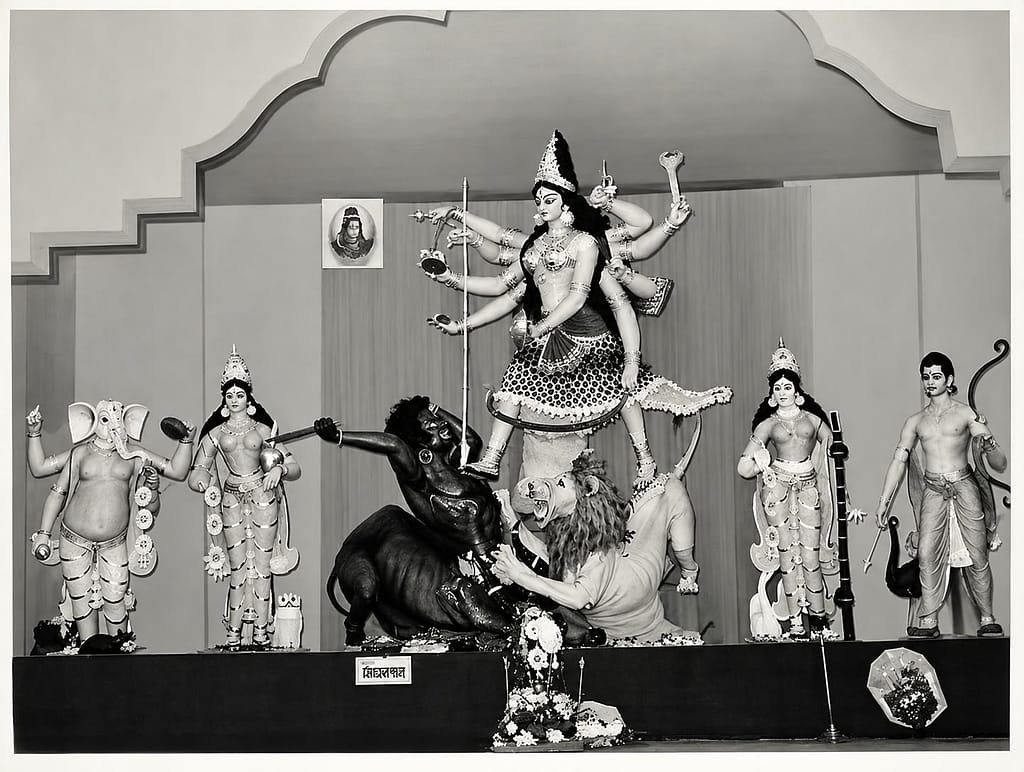
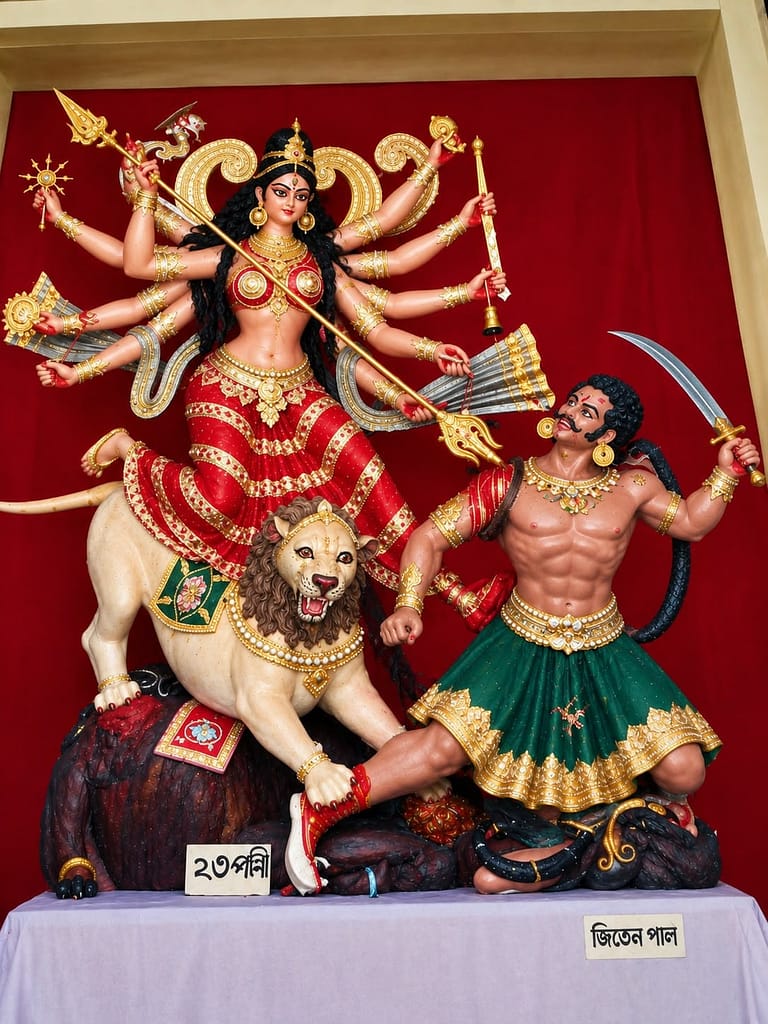
One of the most distinctive features of 23 Pally has always been its idol-making tradition.
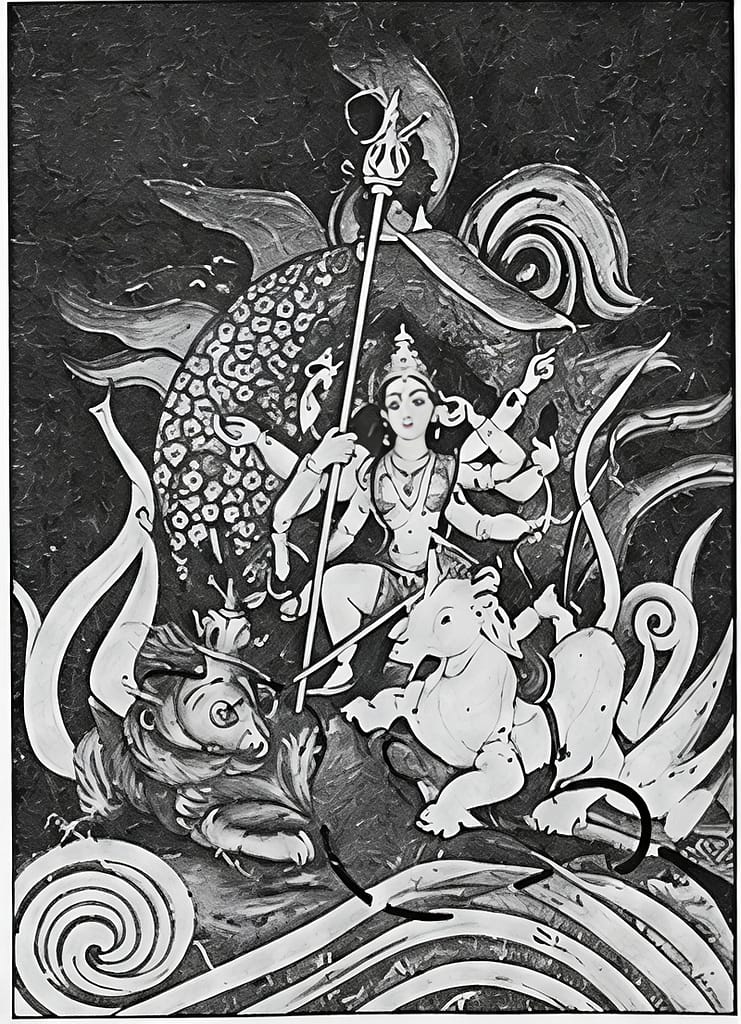
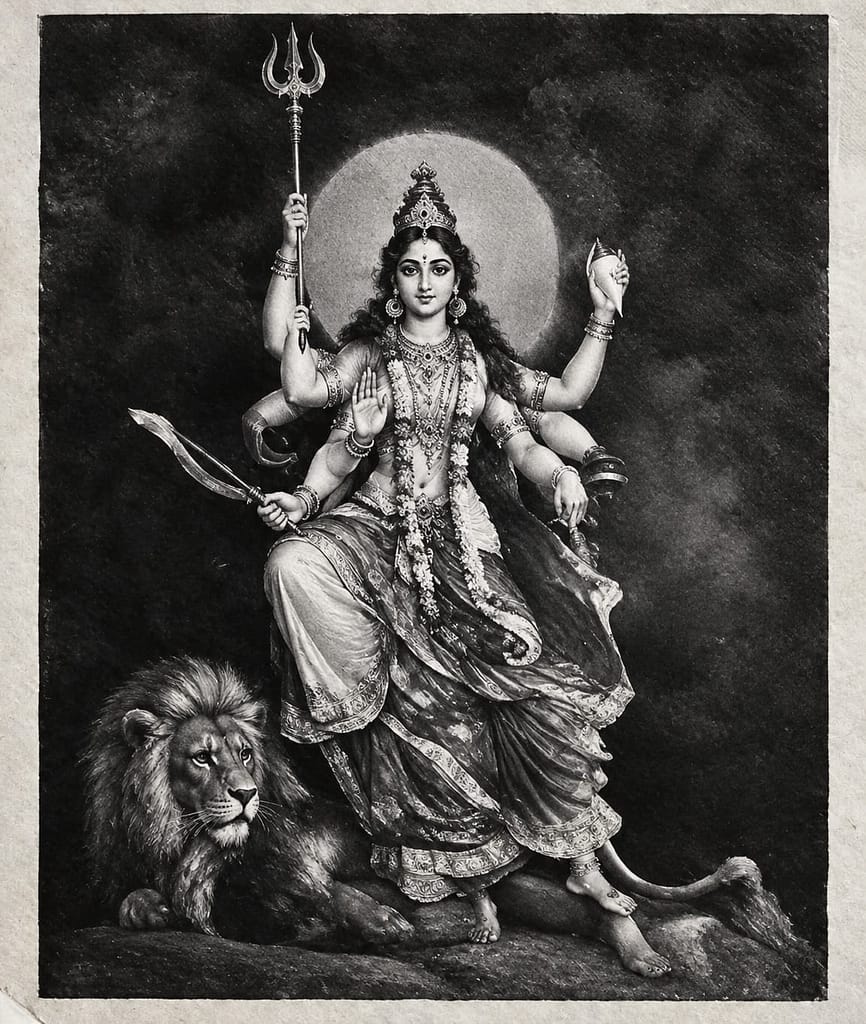
The archival records explain that the Mother was not represented in a conventional manner every year. Instead, the artists drew inspiration from India’s vast artistic heritage — from sculptures carved in stone, images found in temples, paintings and works preserved across the country.
These artistic references were reinterpreted to create the image of Maa Durga at 23 Pally.
The Puja records preserve a remarkable chapter in which the idol was conceived from an artistic reference and transformed into a contemporary representation of the Mother.
This became a defining philosophy of 23 Pally:
Tradition was never allowed to become repetition.
When South Calcutta Came to 23 Pally
The artistic reputation of 23 Pally eventually extended far beyond its immediate neighbourhood.
The archive records the appreciation of artists, academics, performers and public figures who visited the Puja.
Among them was Dr. Shyama Prasad Mukherjee, who, after seeing the idol, wrote:
“দক্ষিণ কলিকাতা বাসী আমরা প্রতিমা দর্শনে উত্তর কলিকাতায় যাইতাম। ২৩ পল্লীর প্রতিমা এতই সুন্দর মাতৃমূর্তি দেখতে এখন সমস্ত কলিকাতাবাসী দক্ষিণ কলিকাতায় আসে। ২৩ পল্লীর এই কৃতিত্বে দক্ষিণ কলিকাতাবাসী গর্ব অনুভব করে।”
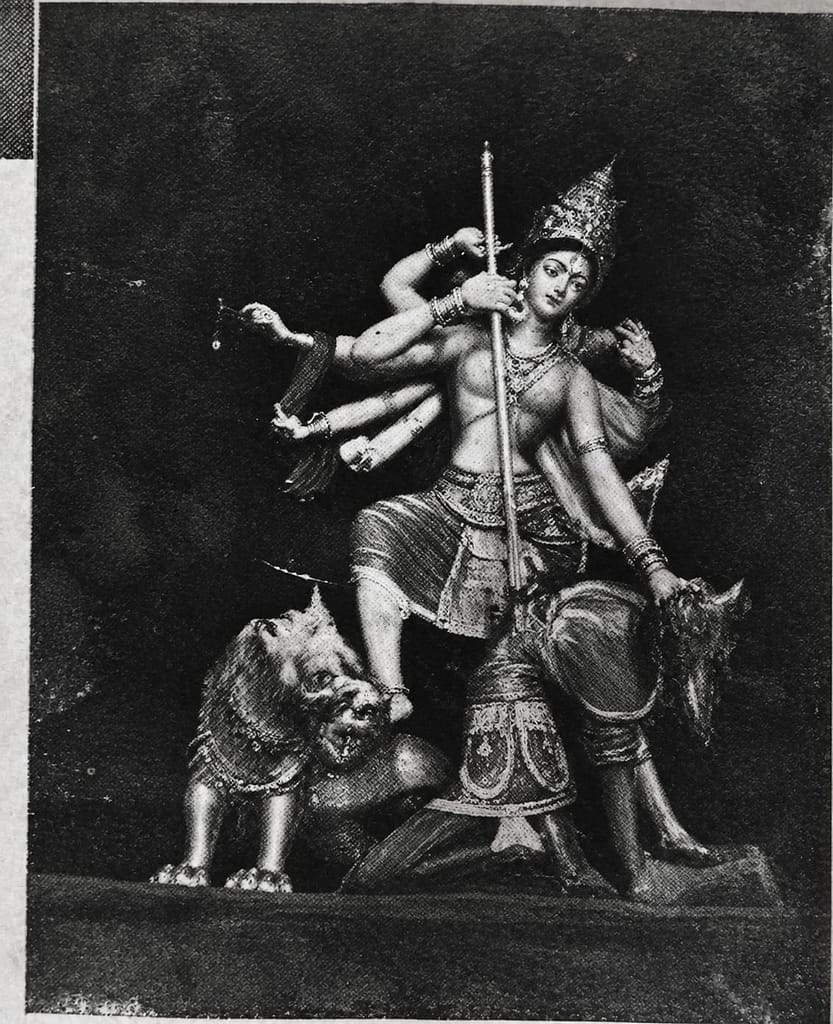
6 October 1945
It is one of the most memorable tributes in the history of 23 Pally.
The words capture a remarkable transformation: a neighbourhood Puja had become an artistic destination in its own right, drawing people from across Calcutta.
Words from Great Artists & Visitors
The archives preserve several other extraordinary tributes.
Shilpacharya Nandalal Bose
“আমার আঁকা ছবি এই ভাবে প্রাণ পাবে তা ভাবতে পারি নাই।”
14 October 1953
Uday Shankar
“My congratulation to the artist and the people for their wonderful achievement. It is beautiful.”
14 October 1953
Dr. Kailash Nath Katju, Governor of West Bengal
“I had the blessing of worshipping the devi this morning here. 9th October 1951. May the even guide us.”
9 October 1951
These words tell an important part of the 23 Pally story.
The tradition reached a new level under artists such as Laye Jiten Pal of Kumartuli, whose work repeatedly attracted attention across Bengal. Over the years, Jiten Pal gave shape to many of the idols of 23 Pally, leaving a lasting mark on the artistic tradition of the Puja.
The idols were not simply admired by the general public. They attracted the attention and appreciation of people whose lives were devoted to art, literature, scholarship and culture.
Through Difficult Times
The history of 23 Pally also reflects the history of Bengal itself.
The records from the early 1940s speak of a Bengal passing through extraordinary hardship — war, famine, scarcity and uncertainty.
Yet the Puja continued.
In one particularly poignant account, the organisers acknowledge that the circumstances were beyond their own making:
“এমন দিনে আমরা করেছি অর্চনা — সে আমাদের কীর্তি নয়, যে মহামায়ার প্রসাদ।”
Even in difficult times, the community came together to organise the Puja and extend its celebrations to those in need.
Worship Through Service
The joy of Puja was meant to be shared
Service has been an integral part of the 23 Pally tradition from its earliest years.
The records repeatedly mention the distribution of dhoti, sari, blankets, rice and dal among those in need, along with Daridra Narayan Seva.
In several years, hundreds of garments were distributed.
The Puja therefore became an occasion not only to worship the Mother, but also to reach out to those around the community.
This idea has remained central to 23 Pally:
Devotion is complete when it becomes service.
Sport, Youth & Physical Culture
23 Pally’s celebrations also embraced physical culture and sport.
The records describe sports competitions, physical exercises and demonstrations of strength and skill, particularly as part of the Puja festivities.
At one point, an “All Bengal Birastami Tournament” was organised, along with demonstrations of physical culture and exercise.
The involvement of young people in these activities gave the Puja a wider social purpose — encouraging participation, discipline, camaraderie and a sense of belonging.
A Living Theatre Tradition
The theatre tradition continued to grow alongside the Puja.
Over the decades, productions ranged from mythological and historical themes to contemporary drama and comedy.
Some performances involved senior members of the community, while others provided a platform for younger performers.
The stage became one of the places where the generations of 23 Pally met.
The People Who Built 23 Pally
No history of 23 Pally can be told through one name alone.
It was built by generations of people who contributed in different ways — organisers, artists, priests, performers, donors, volunteers, sportsmen, cultural workers and residents.
But every journey has a beginning.
And at the beginning of this journey stood Samar Mitra, whose enthusiasm helped plant the first seed.
Around him came Bankim Roy Chowdhury (Kaluda), Kalipada Bose and Phanindranath Mitra, along with Satyan Dutta, Dr. Surendra Roy Chowdhury, Amiya Roychowdury, Rai Saheb Shantipada Chakraborty, Bankim Mukherjee, Sunil Bikas Sengupta, Parimal Sengupta and many other respected members of the community.
For Samar Mitra, however, the Puja was not simply the idea that began in 1939. He remained the driving force through the decades that followed, helping sustain its spirit and continuity as the Puja grew and evolved, until his death in 1987.
In that sense, Samar Mitra was more than one of its founders. He became a constant thread running through much of the Puja’s early and formative history — a quiet, enduring presence behind its journey across generations, and an important force in the journey that eventually led to the present temple and the Ashtadhatu idol
In the years that followed, many more individuals made their mark on the institution and helped shape its character. Among them were Dr. Gorachand Nandy, Dr. Parimal Khanobis, Mrs. Lila Mitter and many others, whose contributions form part of the wider story of the people who nurtured 23 Pally over the years.
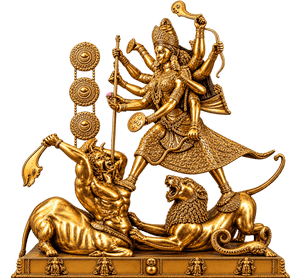
The Present Temple & Ashtadhatu Idol
The present idol of Lord Shiva was installed in 1981, at the encouragement of Dr. Gorachand Nandy.
The installation was inaugurated by the respected Shankaracharya of Joshi Math, and the idol was procured from Benaras.
Subsequently, Samar Mitra began discussions with Sri Shiunath Biswakarma, the principal sculptor of the present Durga idol. Work on the idol commenced in 1983 and continued for three years.
The present Ashtadhatu idol, based on the form of the deity worshipped in 1976, was completed and inaugurated in 1986. It marked an important transition in the history of 23 Pally, when 23 Pally Sarbojanin Durgotsab Samity became 23 Pally Durga Mandir.
The Radha-Krishna Temple was subsequently inaugurated, adding another important dimension to the spiritual life of the Mandir complex.
Since the inauguration of the Ashtadhatu Durga idol in 1986, the Mandir has continued as a place of daily worship, with prayers offered every day and Bhoga offered to the deity.
From One Generation to the Next
The surviving records repeatedly acknowledge the contribution of those who carried the responsibility forward.
Presidents changed.
Artists changed.
Organisers changed.
The neighbourhood changed.
But the Puja continued.
Generations of people took responsibility for carrying the tradition forward, each leaving their own contribution while preserving what had come before.
Through those changing years, Samar Mitra remained a familiar and enduring presence in the life of 23 Pally — part of the continuity that connected its beginnings with the generations that followed.
That perhaps best describes the history of 23 Pally.
23 Pally Today
More than eight decades have passed since that first Puja in 1939.
From the first idol shaped by Biren Poto to the artistic interpretations that brought people from across Calcutta; from the first community theatre performances to generations of cultural programmes; from physical culture and sport to Daridra Narayan Seva — the history of 23 Pally has always been about much more than the four days of Puja.
It is about a community creating something together.
A Legacy That Lives On
In 1939, a few young people planted a seed, today, 23 Pally stands as a living link between generations.
Today, 23 Pally runs under the aegis of the 23 Pally Durga Mandir Society, carrying forward the spirit of devotion, art, culture, service and community that has defined this institution since 1939.